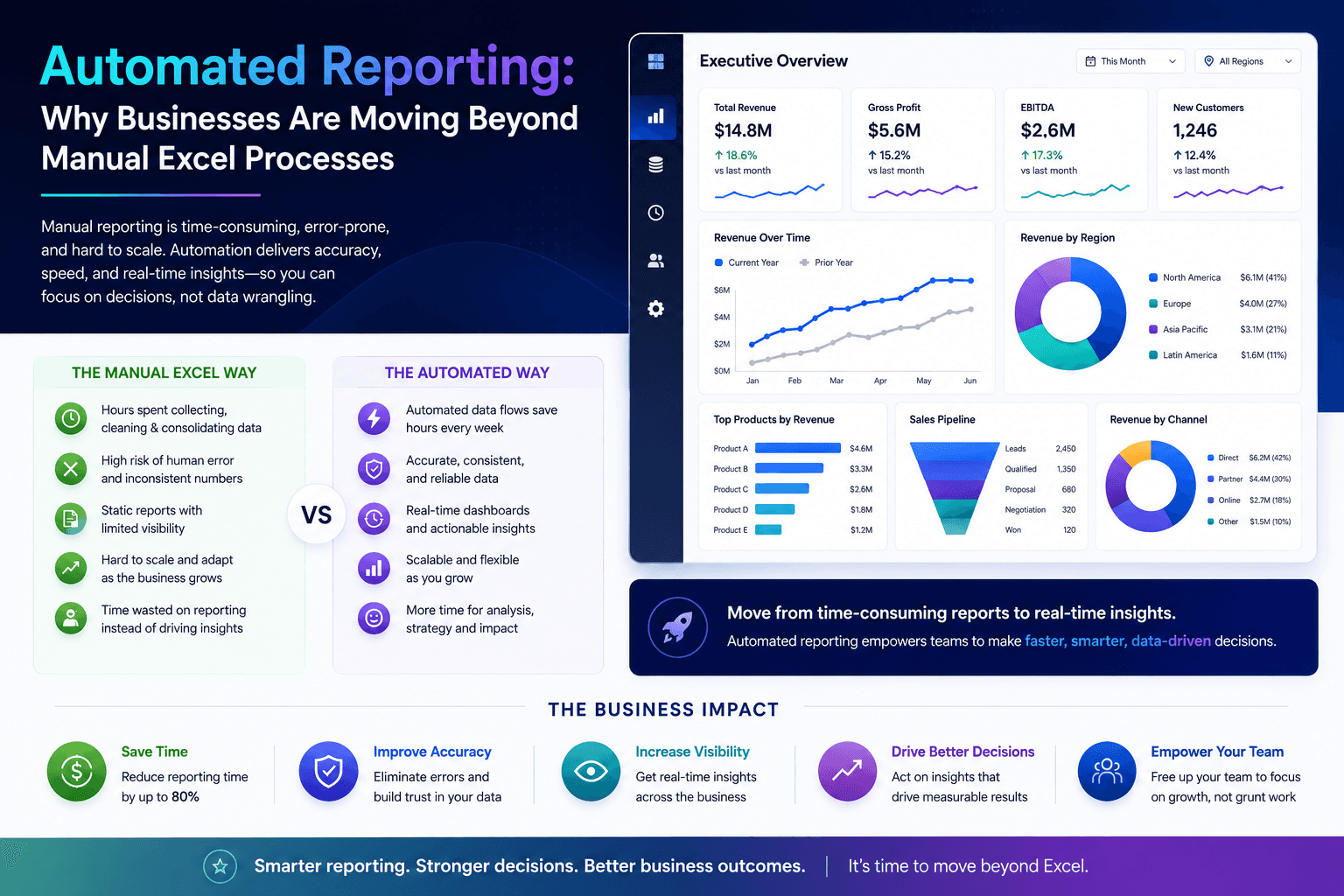




An FP&A application should help people change assumptions, understand the consequences and agree an action. Moving a workbook into a browser does not achieve that by itself. The useful shift is from collecting files to managing a planning process with clear drivers, ownership and review rules.
Start with the decision that the forecast should change
Ask what somebody will do differently when the forecast moves. Will they slow hiring, change stock purchases, adjust pricing or protect cash? If the answer is unclear, a more detailed forecast may only create more work. Define the decision, the person authorised to make it and the evidence they need.
Then work backwards to the inputs. A workforce plan needs approved roles, start dates, salary assumptions and the treatment of vacancies. A cash forecast needs payment assumptions and timing, not simply a copied profit forecast. The model should make these relationships understandable to the people who own them.
Choose drivers that can be explained and challenged
Consider an illustrative services team. Revenue might depend on available people, utilisation and price. Changing utilisation should affect the revenue forecast in an understandable way. Hiring adds cost before the new colleague reaches full productivity. If those effects are hidden in separate files, a scenario becomes difficult to review.
Useful drivers are specific enough to discuss and stable enough to maintain. Too many drivers can create false precision. Record the source, owner and review date for the important assumptions. Distinguish an observed actual from a judgement, and distinguish both from a machine learning prediction.
Give every scenario a purpose
A base case, downside and upside are useful only when their differences are explicit. Name the assumption being tested and keep the comparison consistent. An upside case that quietly changes prices, headcount and collection timing at once is hard to interpret.
- Keep an approved baseline that people can refer to.
- Record who changed an assumption and why.
- Show the operational and cash consequences of that change.
- Define who can submit, return or approve each part of the plan.
These are recommended process controls. Their exact implementation depends on the agreed application scope and the organisation's responsibilities.
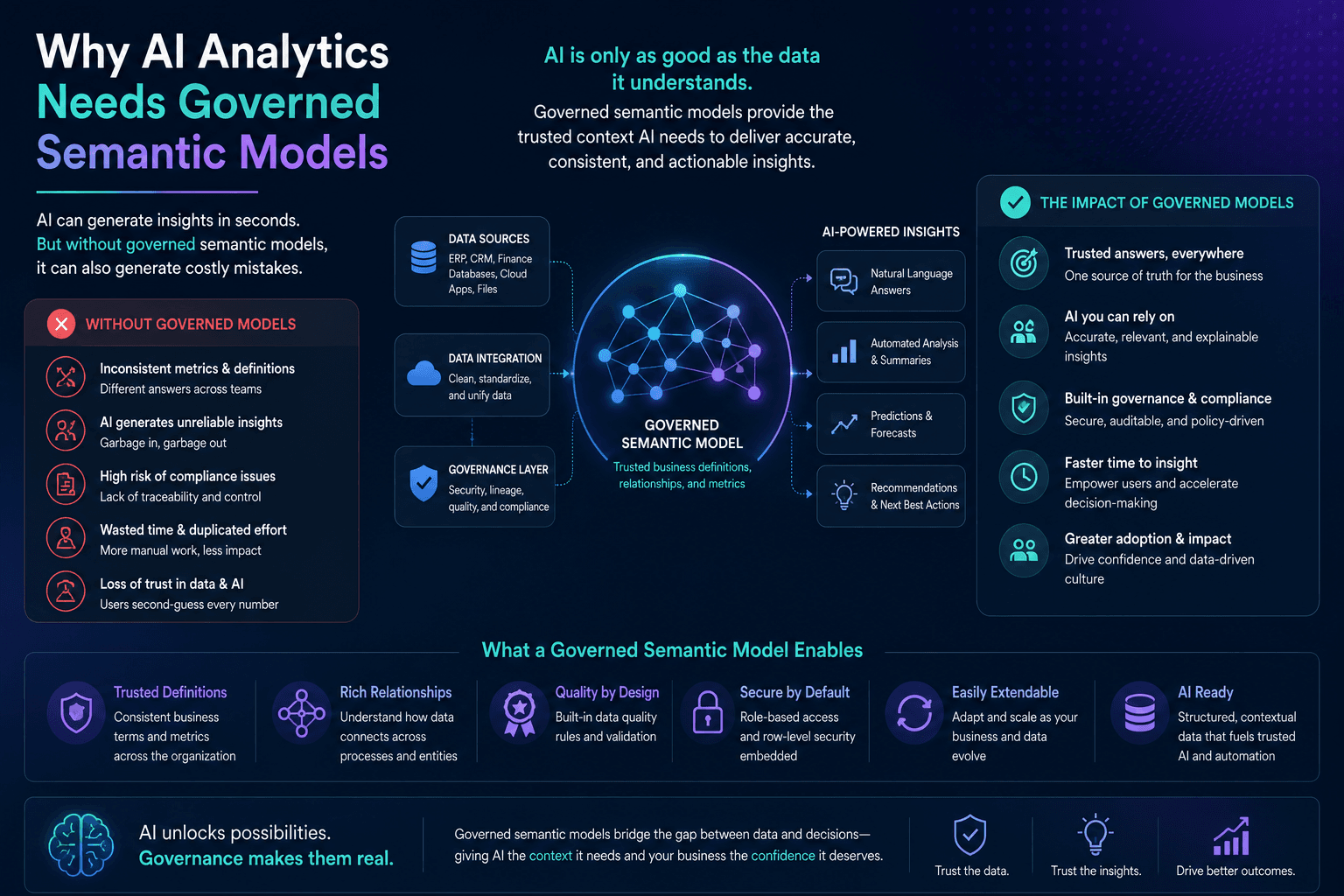
Connect planning to a shared actuals foundation
Actuals and plans need compatible entities, periods, accounts and dimensions. A consistent preparation layer can support reporting and planning without every workbook inventing its own mappings. Microsoft's describes a separation between ingestion, preparation and curated analytical consumption. The planning implication is practical: give contributors a stable, agreed starting point.