


Great dashboards do not start with visuals.
They start with strong data engineering.
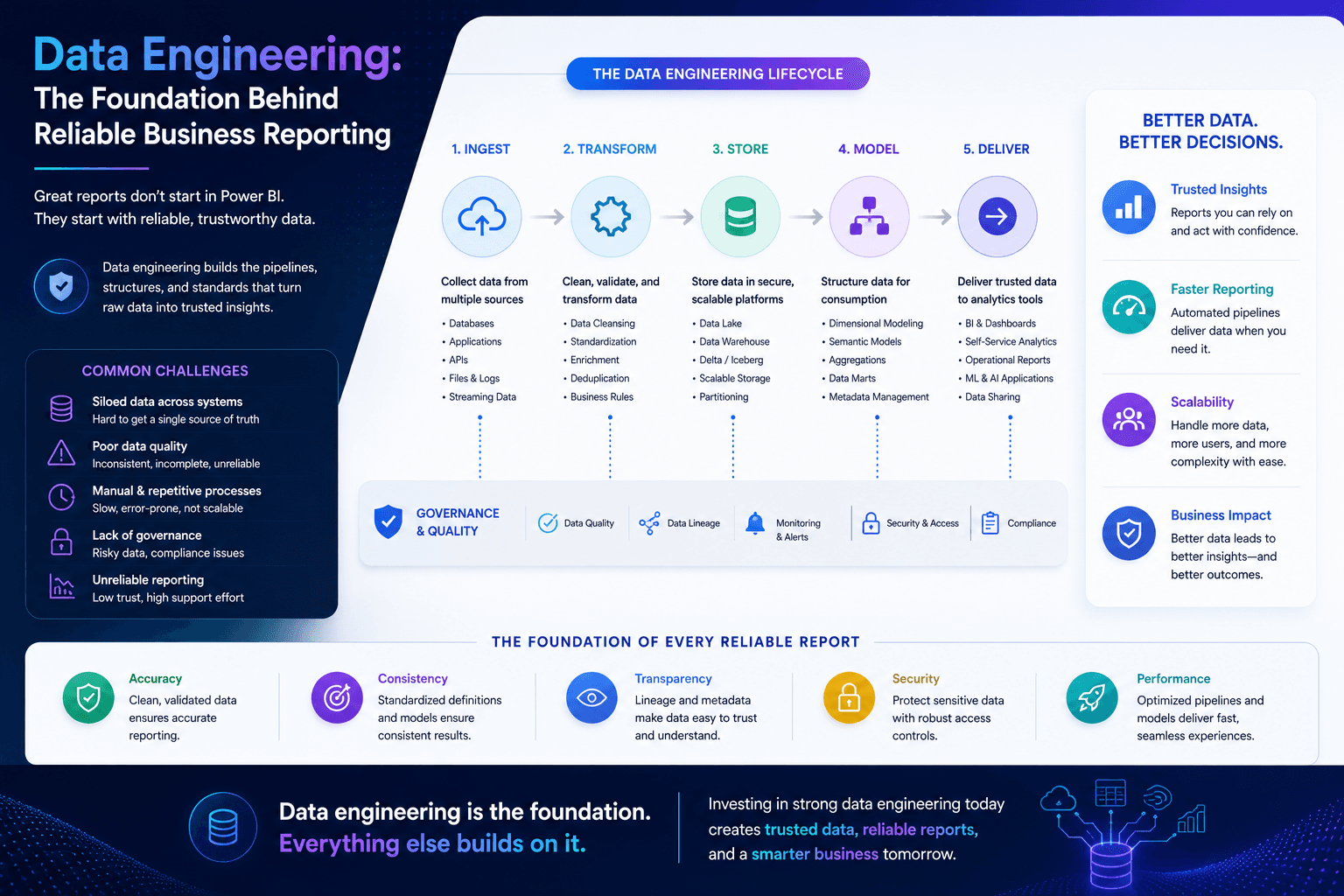
Many organisations focus on the final report: the charts, KPIs, filters, and dashboards that users interact with. But the real value sits underneath the surface, in the way data is collected, cleaned, transformed, structured, and governed.
Without a reliable data engineering layer, reporting quickly becomes difficult to trust.
Teams may face issues such as inconsistent numbers, duplicated records, missing data, slow refreshes, manual spreadsheet work, and conflicting KPI definitions. These problems usually do not come from Power BI itself. They come from weak or fragmented data foundations.
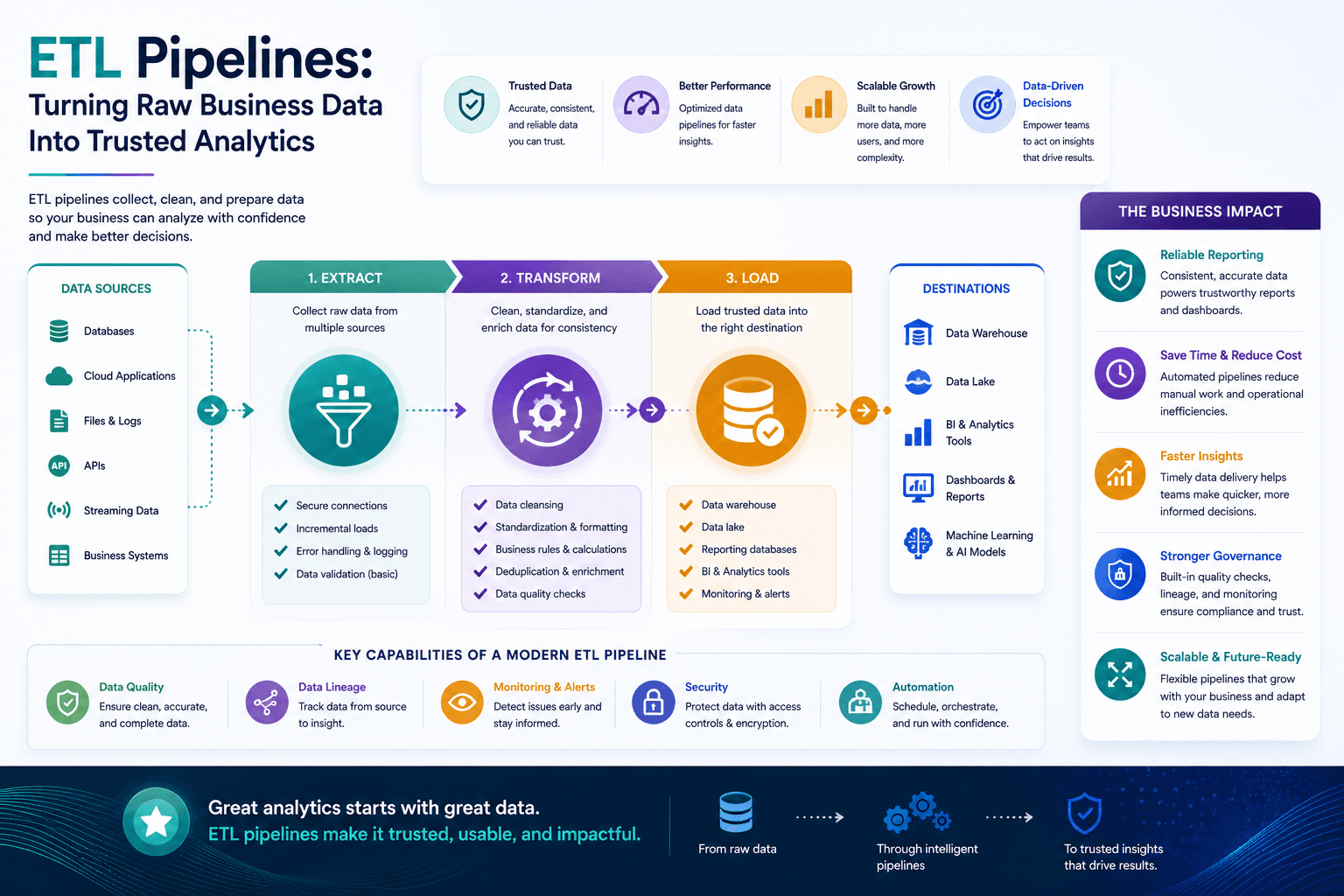
Data engineering helps solve this by creating structured pipelines that move data from source systems into a trusted reporting environment.
This can include data from:
- Spreadsheets
- CRM systems
- ERP platforms
- Databases
- APIs
- Finance systems
- Operational applications
- Third-party platforms
Once the data is ingested, it can be cleaned, standardised, validated, and prepared for reporting.
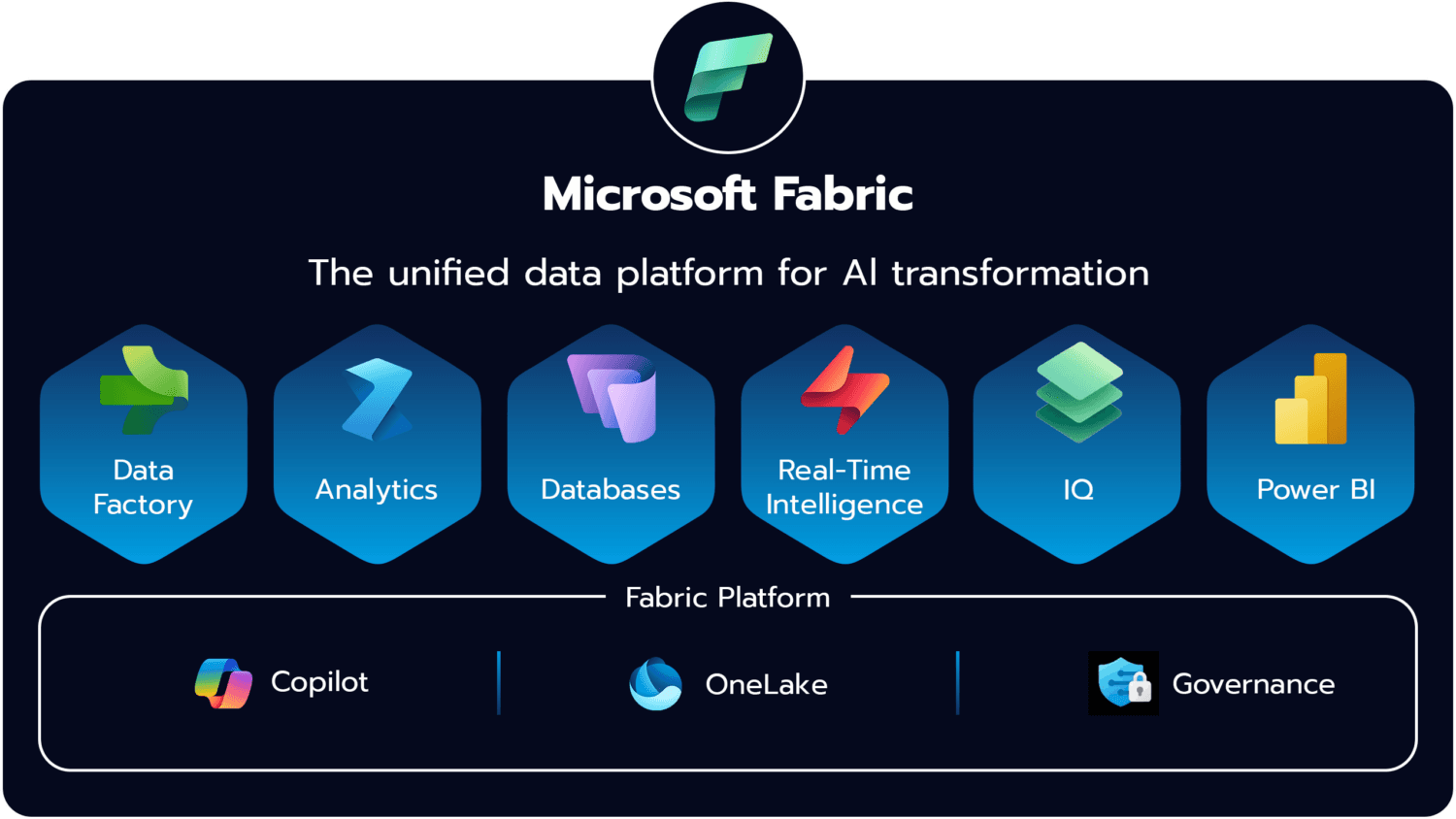
At DataNova, data engineering sits at the centre of the platform. We help organisations connect their business data into Microsoft Fabric, automate data pipelines, and build reporting-ready models that support Power BI dashboards, paginated reports, AI insights, and machine learning use cases.
This means businesses are not just building reports. They are building a governed data foundation.
Strong data engineering helps organisations reduce manual reporting effort, improve trust in KPIs, and create a scalable analytics environment that can grow with the business.
A dashboard is only as good as the data behind it.
With the right engineering foundation, organisations can move from disconnected reporting to reliable, automated, and trusted business insight.