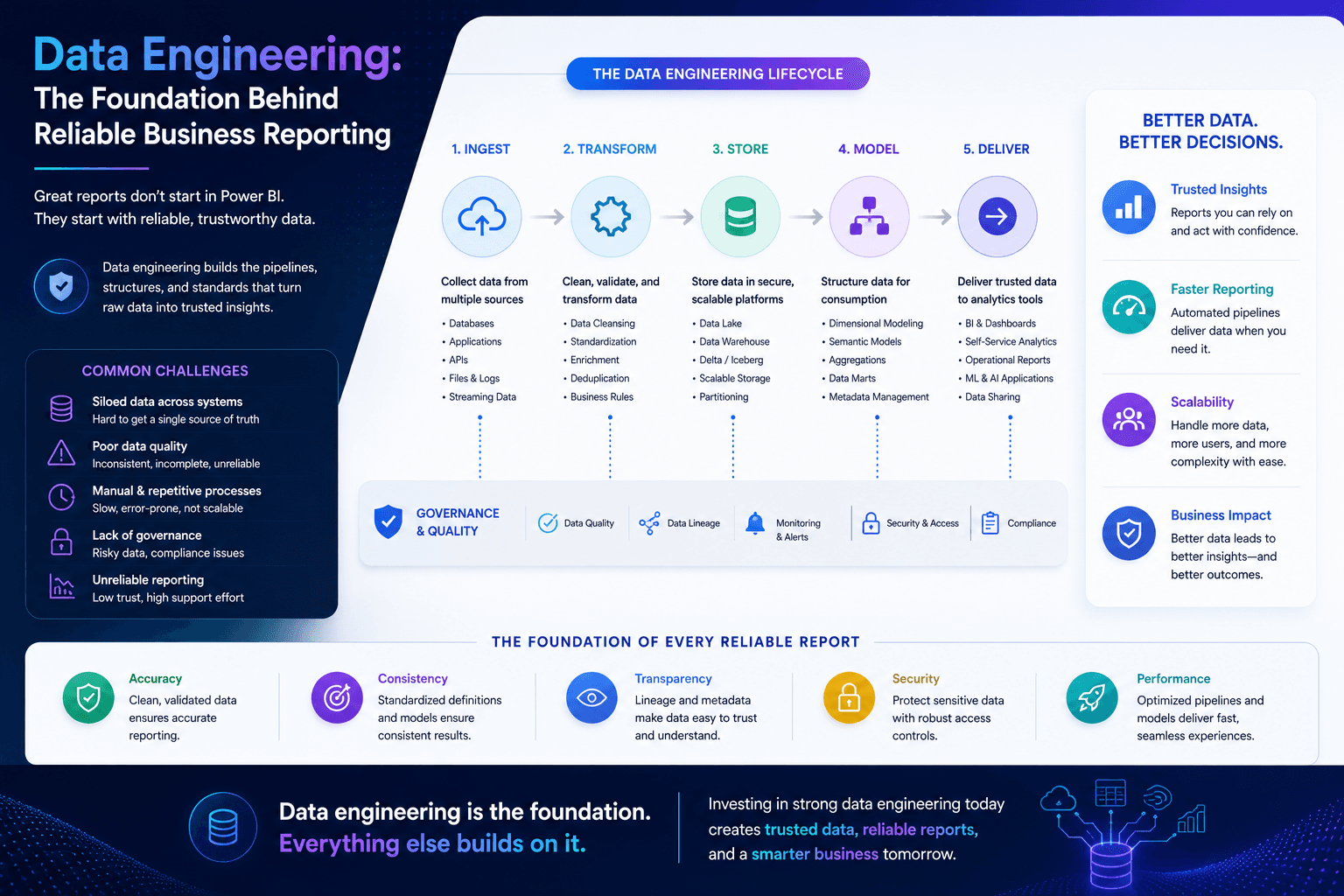



Business data is rarely ready for reporting straight away.
It usually lives across multiple systems, formats, and structures. Some data may come from spreadsheets. Some may come from CRM or ERP platforms. Some may sit in databases, APIs, exports, or third-party systems.
Before that data can support trusted reporting, it needs to be prepared.
That is where ETL pipelines come in.
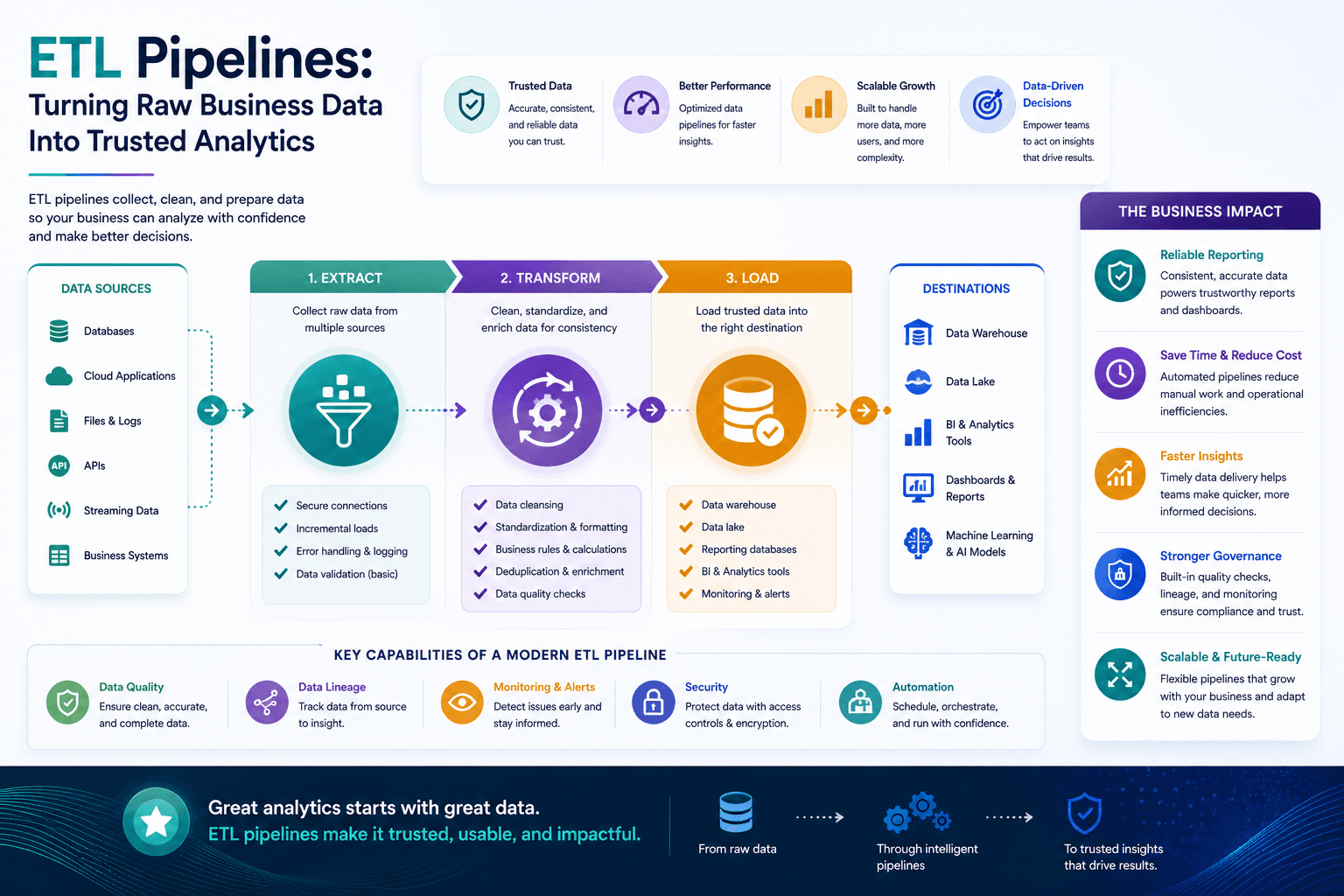
ETL stands for extract, transform, and load. It is the process of collecting data from source systems, reshaping it into a useful structure, and loading it into a reporting or analytics environment.
The process typically involves three stages.
First, data is extracted from the original source. This might be a spreadsheet upload, a database connection, an API integration, or an export from a business system.
Second, the data is transformed. This may include cleaning values, standardising formats, applying business rules, combining tables, removing duplicates, validating records, and preparing KPIs.
Third, the data is loaded into a destination such as a lakehouse, warehouse, semantic model, or reporting layer.
Without ETL, reporting often becomes manual. Users export files, copy and paste figures, rebuild spreadsheets, and spend time checking whether the numbers are correct.
With automated ETL pipelines, businesses can reduce manual work and improve consistency.
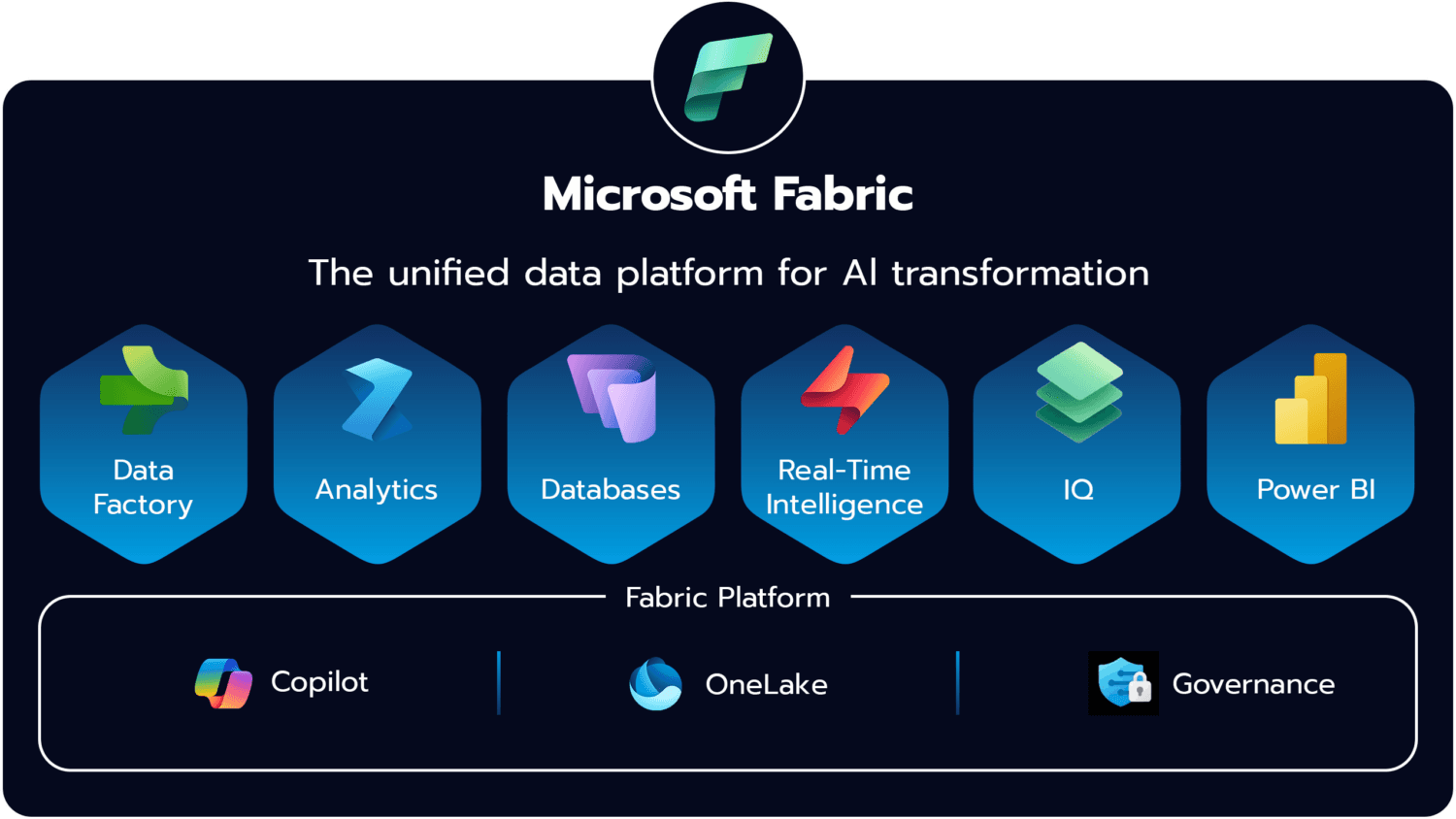
DataNova helps organisations automate this process using Microsoft Fabric. Data can be ingested from spreadsheets, CRMs, ERPs, databases, and APIs, then prepared for Power BI reporting through governed pipelines and semantic models.
This creates a more reliable path from raw data to business insight.
The benefit is not just technical. It directly affects decision-making.
When ETL pipelines are automated and governed, users can trust that reports are built from consistent, structured, and up-to-date information.
ETL turns raw data into something the business can actually use.
For modern organisations, it is one of the most important foundations behind accurate reporting, scalable dashboards, and trusted analytics.