


Most business reporting looks backwards.
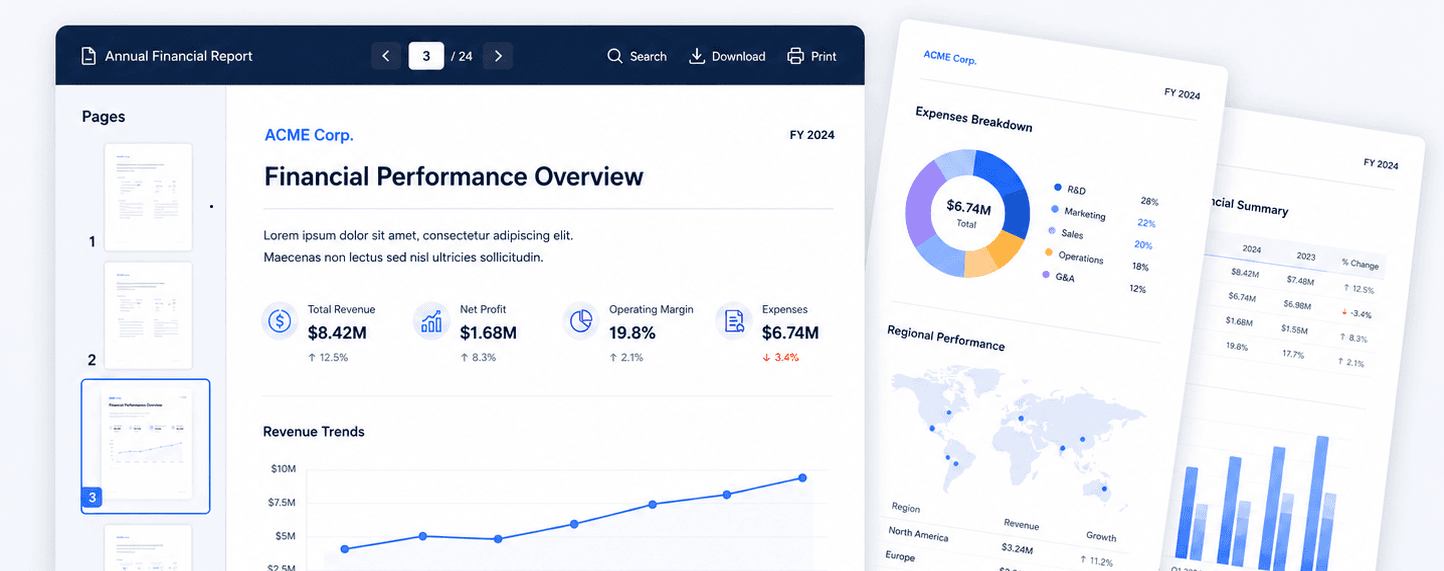
It tells you what happened last month, what changed this week, or how performance compares to target. That visibility is important, but modern organisations increasingly need more than historical reporting.
They need to understand what is likely to happen next.
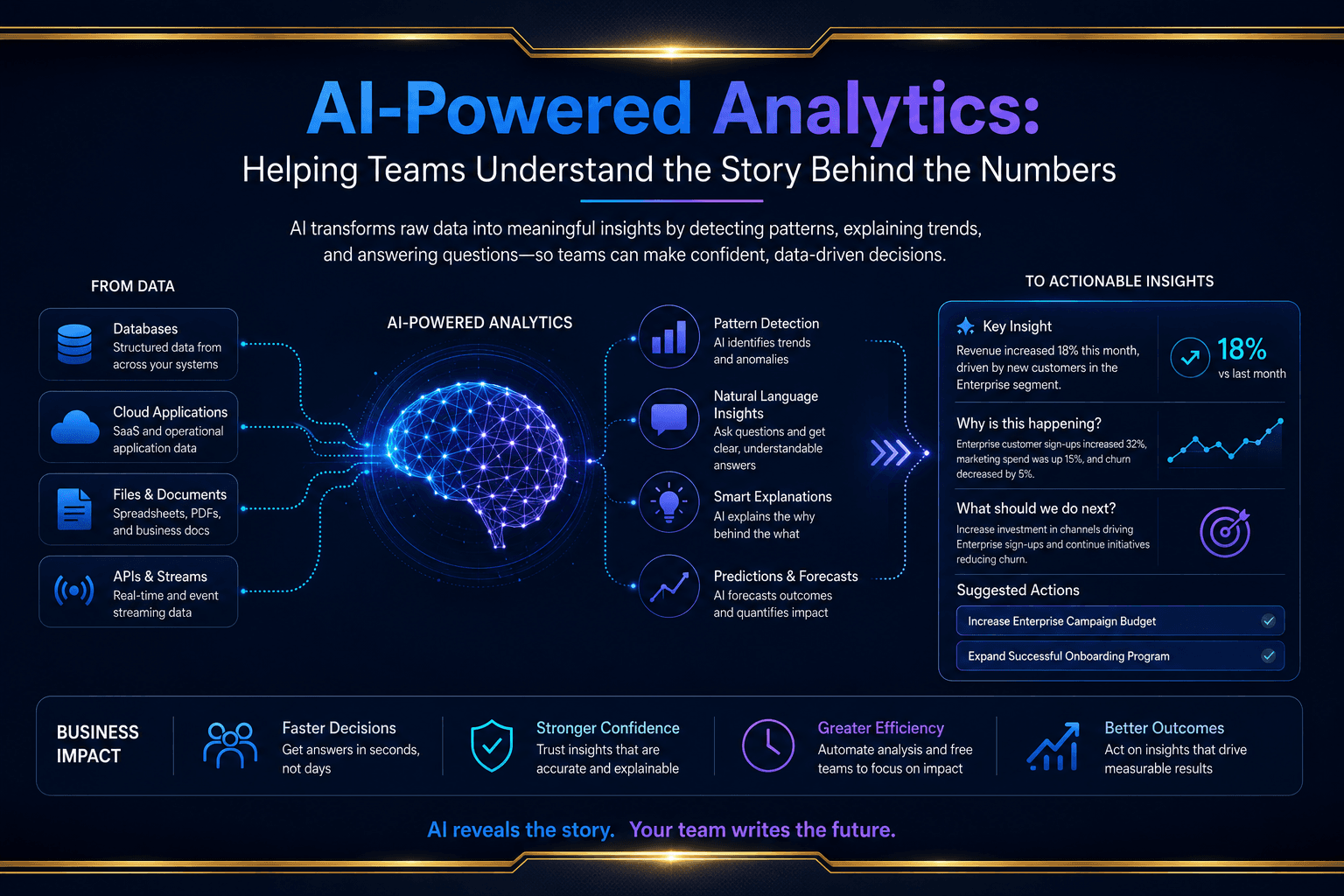
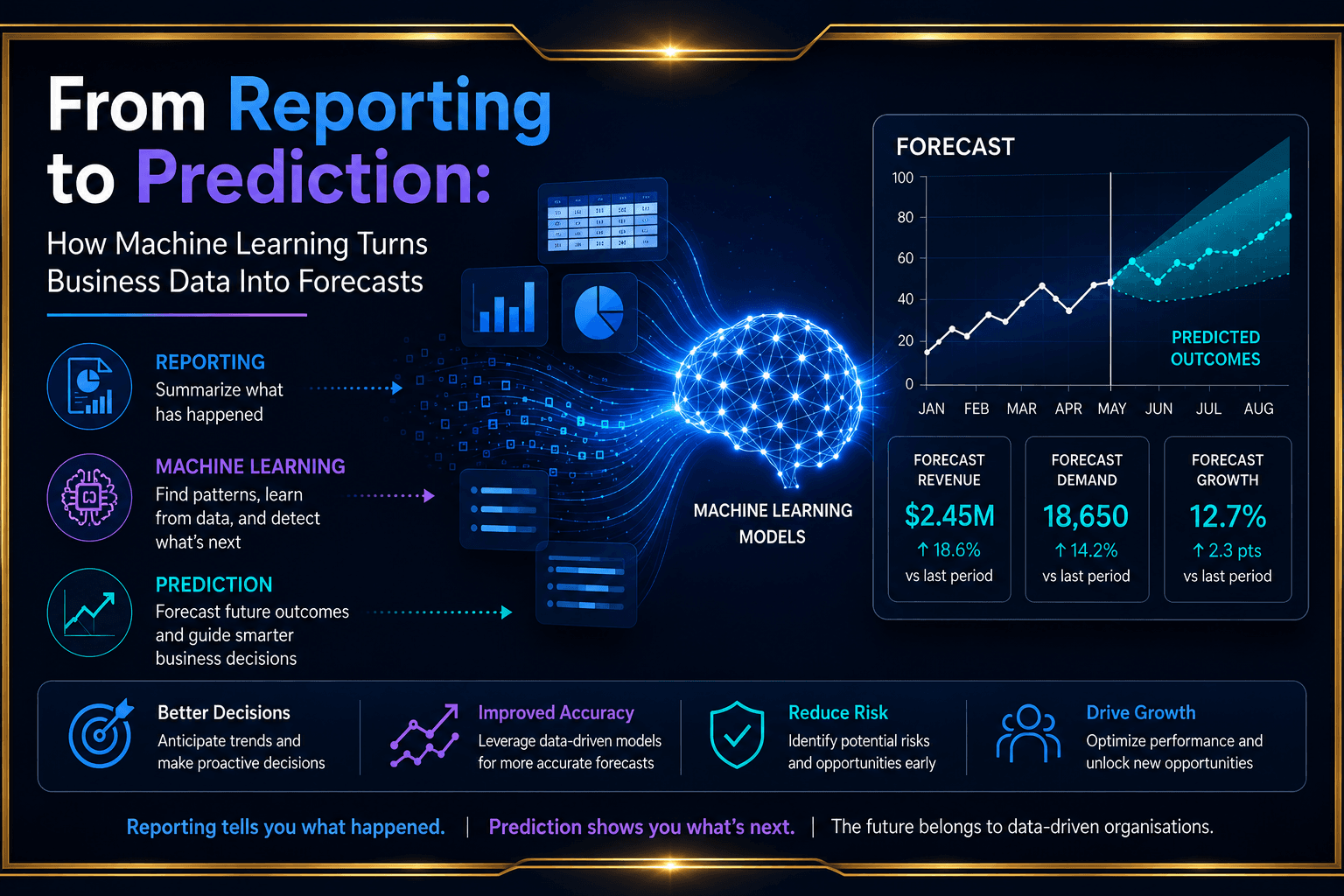
Machine learning can help businesses move from reporting to prediction by identifying patterns in existing data and using those patterns to forecast future outcomes.
This can support use cases such as:
- Revenue forecasting
- Sales pipeline prediction
- Customer churn analysis
- Demand planning
- Stock and inventory forecasting
- Cash flow forecasting
- Operational performance prediction
- Anomaly detection
However, machine learning is only as good as the data foundation behind it.
If data is fragmented across spreadsheets, CRM systems, ERP platforms, and disconnected reports, predictive analytics becomes difficult to trust. Before businesses can make reliable forecasts, they need clean, structured, and governed data.
That is where DataNova helps.
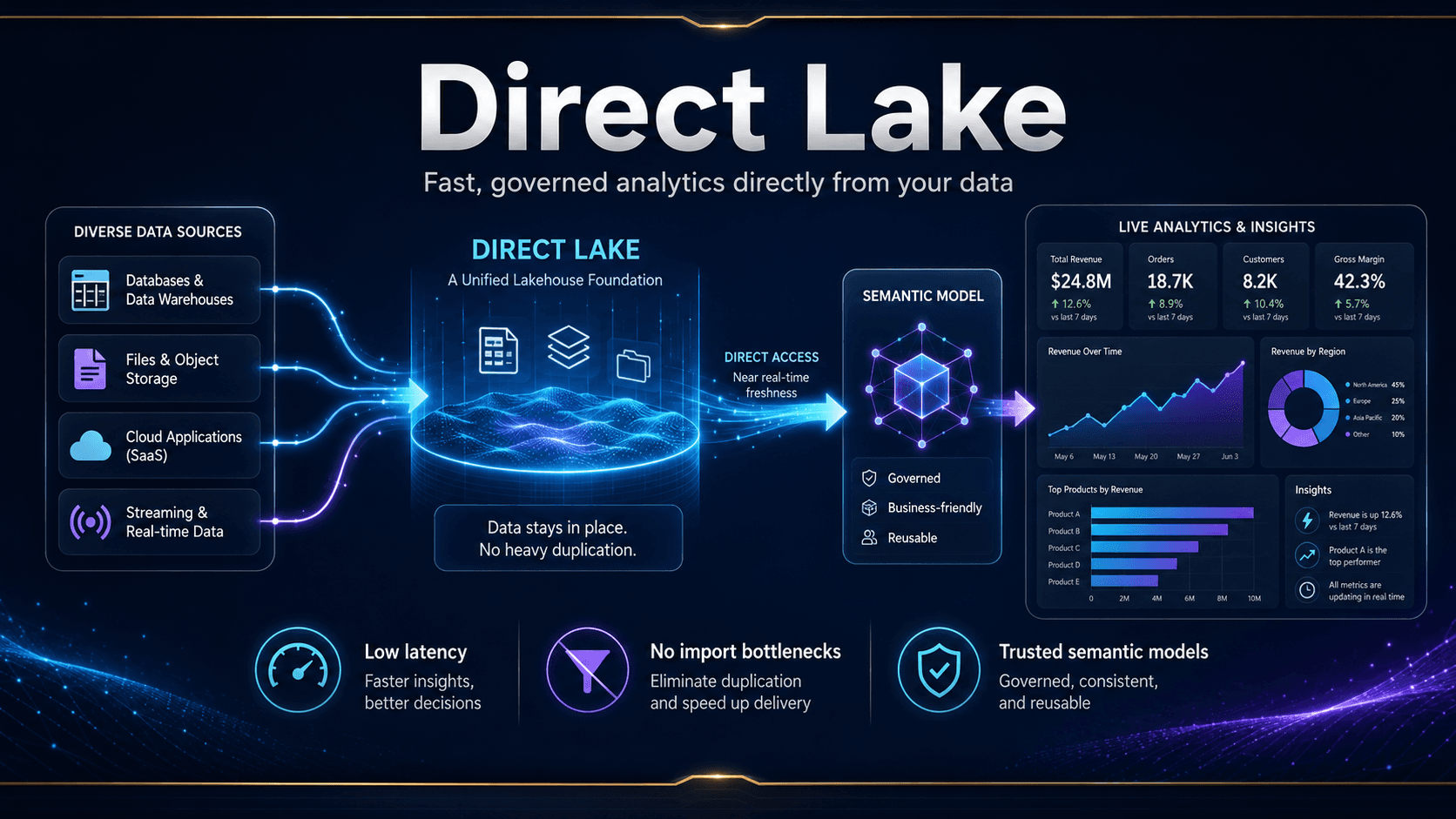
DataNova brings business data into a governed Microsoft Fabric pipeline, structures it through semantic models, and delivers reporting through Power BI dashboards. Once this foundation is in place, organisations are in a much better position to explore predictive analytics and machine learning.
The journey usually starts with visibility.
First, businesses need to understand what has happened. Then they need consistent KPIs and trusted dashboards. Once the data is reliable, machine learning can help identify future risks, opportunities, and trends.
Machine learning should not be treated as a shortcut. It works best when it builds on a strong reporting foundation.
With the right data platform in place, businesses can move from asking “what happened?” to asking “what is likely to happen next?”