


Most businesses do not have a data shortage.
They have a data fragmentation problem.
Customer information may sit in a CRM. Financial data may sit in an ERP system. Operational data may live in databases. Teams may still rely on spreadsheets for planning, tracking, and reporting. Other data may come from APIs, third-party tools, or manual exports.
Individually, each source may be useful.
Together, they can be difficult to manage.
When data is fragmented, reporting becomes slow and inconsistent. Teams spend time exporting, merging, checking, and reconciling information. Different departments may produce different numbers. Leadership may struggle to get one clear view of business performance.
A unified reporting platform helps solve this.
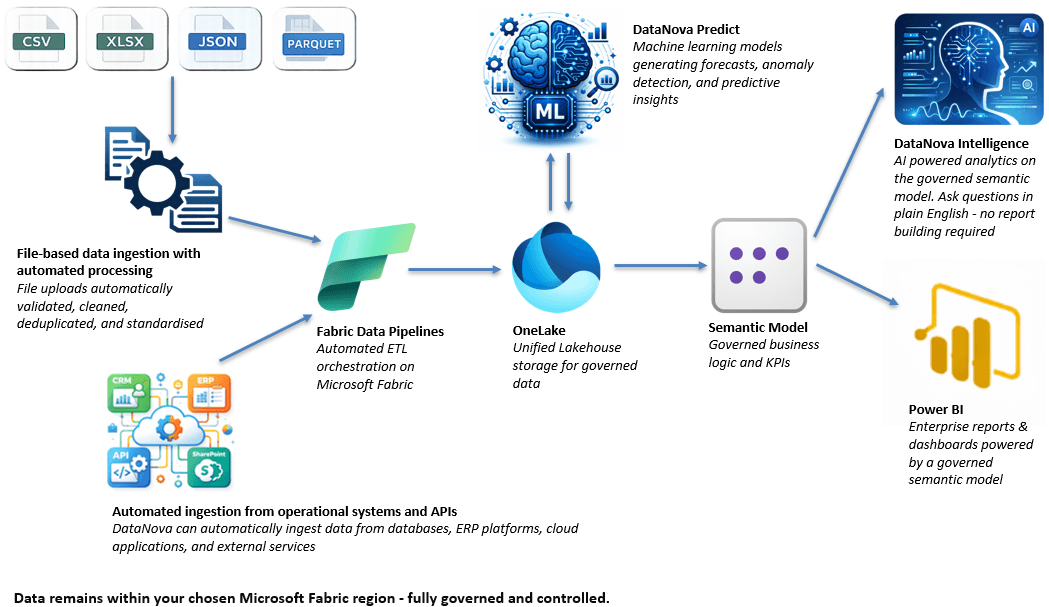
By connecting CRM, ERP, spreadsheets, databases, and APIs into one governed analytics environment, businesses can create a more reliable reporting foundation.
This allows teams to:
- Reduce manual reporting work
- Improve KPI consistency
- Combine data across departments
- Create live Power BI dashboards
- Support executive reporting
- Improve trust in business numbers
- Build a foundation for AI and machine learning
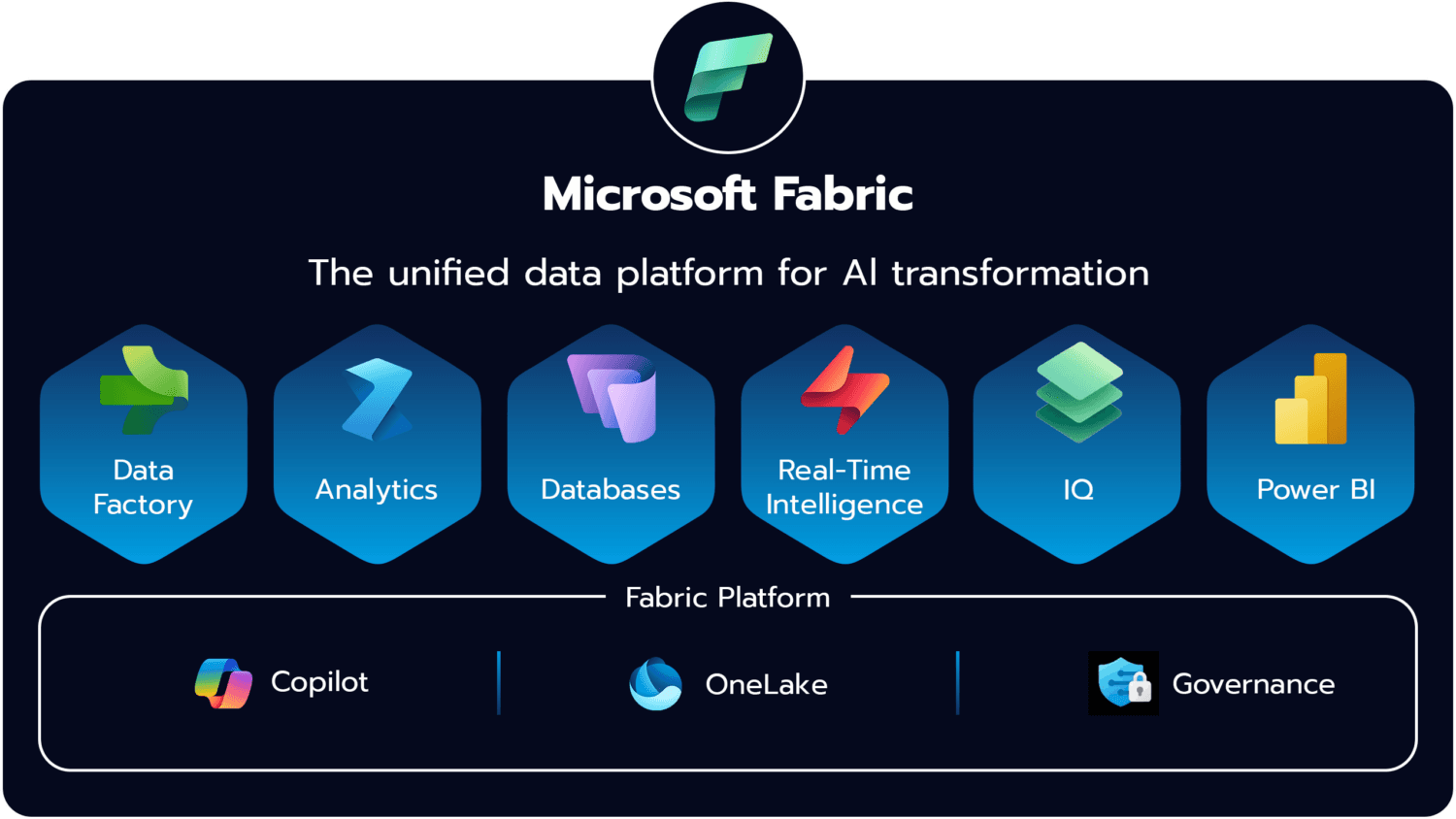
DataNova helps organisations bring fragmented data into Microsoft Fabric, automate the data pipeline, and deliver governed dashboards through Power BI.
This means businesses no longer need to rely on disconnected reports and repeated spreadsheet consolidation. Instead, they can build one structured reporting layer that supports multiple teams and use cases.
The value is not only technical.
It is operational.
When everyone works from the same trusted data foundation, decisions become faster and more consistent. Finance, sales, operations, and leadership teams can align around the same numbers.
DataNova turns disconnected data sources into a governed reporting platform, helping organisations move from manual reporting to live business insight.